Rich and Vibrant Colors
Available now
HDR10+ is the most advanced HDR technology bringing the highest quality movies, TV
episodes and games to the widest range of devices.
With HDR10+ you get a more vibrant and lifelike viewing experience, as it enhances the
dynamic range and color accuracy of your content, delivering stunning visuals with greater
detail and depth.
Watch Now
Entertainment
Feel the difference with HDR10+ on your favorite movies and episodes on all available screens.
Gaming
See how HDR10+ elevates your gameplay by bringing you the best visual experience, as intended by the game creators - Play Better.
Go Hard in the paint
Drag the slider below to see how HDR10+ enhances your viewing experience.
Adopter Registration
Please complete the form to apply to be a HDR10+ Adopter.
License Programs
Take advantage of the HDR10+ technology and relevant IPs owned by Founders, royalty-free.
Plus, participate in our Certification program and use of Certification Mark. See our transparent terms and pricing by selecting your license category below.
Source Provider
-
Category:
Source provider (including, Ultra HD Blu-ray Player Manufacturer, AV receiver and soundbar manufacturer, set-top box manufacturer, Game Console manufacturer, GPU/CPU manufacturer or service)
-
License Materials:
- Technical Specifications
- Test Specifications
- Certification Mark
- HDR10+ Certification Mark Usage Guideline
- Essential Patent Claims
-
Certification Requirement:
Self test per requirement described in test specification.
-
Annual Administration:
$2,500
Display Manufacturer
-
Category:
Display Manufacturer (TV/monitor, projector, mobile phone manufacturer; laptop PC; and non-standard interface systems: e.g. inflight entertainment system, hotel cable system)
-
License Materials:
- Technical Specifications
- Test Specifications
- Certification Mark
- HDR10+ Certification Mark Usage Guideline
- Essential Patent Claims
-
Certification Requirement:
Certification by ATC (Authorized Test Center)
-
Annual Administration:
$10,000
SoC
-
Category:
SoC (non-GPU/CPU) vendor
-
License Materials:
- Technical Specifications
- Test Specifications
- Patent Stand Still
-
Certification Requirement:
N/A
-
Annual Administration:
$4,000
Content Company or OS
-
Category:
Content company, Operating System (OS) Company (e.g. media or game publisher, producer, game developer)
-
License Materials:
- Technical Specifications
- Test Specifications
- Certification Mark
- HDR10+ Certification Mark Usage Guideline
-
Certification Requirement:
N/A
-
Annual Administration:
N/A
Tool Vendor
-
Category:
Tool vendor (e.g. processing tool, encoder, game engine)
-
License Materials:
- Technical Specifications
- Test Specifications
- Certification Mark
- HDR10+ Certification Mark Usage Guideline
- Essential Patent Claims
-
Certification Requirement:
Self test per requirement described in test specification.
-
Annual Administration:
N/A
FEATURED PRODUCTS
Lunis OLED TV
LS12000B Laser Projector
OPPO Find X7 Series
Roku Plus Series TV
Search Certified Products
Choose from the following menu options for a list of HDR10+ Certified devices.
CERTIFIED PRODUCTS
Viewing 8701 Products
| Type | Manufacturer | Name / Model | Description | Adaptive | Gaming | ADVANCED | HLG+ |
|---|
HDR10+ FAQs
As of 2026, HDR10+ is supported by over 180 licensees and more than 22,000 certified devices, including most major television brands. It’s also featured in mobile phones, UHD Blu-ray players and a variety of streaming services, and has been adopted in industries ranging from automotive infotainment to in-flight entertainment.
HDR10+ GAMING optimizes HDR display settings dynamically for video games, enhancing overall visibility and more immersive game playing. HDR10+ ADAPTIVE adjusts content based on ambient lighting conditions, ensuring optimal contrast and detail in both dark rooms and bright environments for a consistent viewing experience.
HDR10+ metadata can be generated during post-production mastering, live productions, or transcoding for distribution on formats like UHD Blu-ray, OTT streaming, and broadcast television, using tools and encoders that are available for both professional and mobile workflows. Since HDR10+ metadata creation is automatic, it is extremely cost-effective to simply generate at encode time, and there is no need to pre-compute, store, or archive the data.
Yes, HDR10+ is fully backward compatible with HDR10, the base HDR format.
Although devices that only support HDR10 can play HDR10+ content, they can only use the static metadata portion without any dynamic enhancements. It is effortless for HDR services to adopt HDR10+ as existing HDR10+ content does not need to be reencoded. HDR10+ metadata can simply be calculated and injected into existing compressed streams without going back to source or mezzanine content!
Local tone mapping allows brightness and contrast adjustments on a zone-by-zone basis within a frame, preserving highlights (like sunlight) and without crushing shadows (like dark interiors).
HDR allows creators to use light and shadow more expressively, to better engage the viewer’s attention. With dynamic range that mirrors real-life scenes, directors and cinematographers can craft visuals that are more immersive and emotionally impactful. HDR10+ ensures that these creative decisions can be seen on the widest variety of displays even if the mastering display was of higher quality than what may be in any one particular home!
HDR10+ uses dynamic metadata to deliver scene-by-scene or frame-by-frame instructions for brightness, contrast, and color. This allows the display to optimize tone mapping in real time, preserving the detail in both shadows and highlights. HDR10+ Live encoding (e.g. for sports) always uses frame-by-frame data while VOD content uses scene-based data of which many scenes may be a single frame or a short sequence.
HDR10 uses static metadata, meaning a single tone mapping curve is applied to the entire video program. This “one-size-fits-all” approach is unable to adapt to variations in scene brightness—such as a dark night followed by a bright explosion—leading to crushed shadows or blown-out highlights on many displays.
No. Both HDR10+ and HDR10+ ADVANCED support quantization up to 16 bits at the specification level — this has been true since HDR10+’s introduction. Today’s streaming services deliver all HDR content at 10 bits because that is the current ceiling of practical streaming video codecs, a constraint that applies equally to every HDR format. The standard is not the limit; the codec is.
Some HDR formats are marketed as supporting 12 bits. In streaming, these formats are also delivered at 10 bits, the same as HDR10+. The 12-bit capability refers to a specific disc format with very limited real-world adoption by studios. A separate claim holds that a different color encoding method makes 10-bit “equivalent to 12-bit.” Published research puts the actual efficiency improvement from this method at approximately 10% for certain content — a real but modest advantage, and far short of the four-fold precision difference that distinguishes 10-bit from 12-bit.
Bit depth and peak brightness are also independent. HDR10+ uses the PQ (Perceptual Quantizer) transfer function defined in SMPTE ST 2084, which covers content from 0 to 10,000 nits regardless of bit depth. Claims that 10-bit color depth limits HDR to 1,000 nits are technically incorrect.
While 4K resolution and higher frame rates improve detail and motion smoothness, HDR fundamentally enhances the realism of an image by expanding the range between the darkest blacks and brightest whites in a scene (what cinematographers call “grayscale”. ) This allows viewers to see subtle gradations in “shadows” and “highlights” that mimic natural human vision, making HDR a key factor for better picture quality. This has been recognized by movie studios, OTT streaming services, broadcasting networks, and professionals.
For the latest list of UHD Blu-Ray discs that support HDR10+, please see the following website.
HDR10+ supports a peak brightness up to 10,000 nits.
No. HDR10+ does not charge a per device royalty fee to support the technology.
HDR10+ devices are tested and certified for quality and compatibility. Please see the list of certified products to see if yours are HDR10+ certified.
Yes, HDR10+ is completely backwards compatible with HDR10. An HDR10 only device that receives and HDR10+ signal will play without issues in HDR10.
There is a growing number of devices and content that supports HDR10+. Please see the list of certified products and services.
Because HDR10+ is backwards compatible with HDR10, when HDR10+ content is viewed on an HDR10 display, it is simply just HDR10 content.
No. Neither HDR10+ nor HDR10+ ADVANCED is limited to 4,000 nits, 5,000 nits, or any figure below 10,000 nits. Both specifications support the complete PQ (Perceptual Quantizer) brightness range from 0 to 10,000 nits, as defined by SMPTE ST 2084 — the international standard for HDR video. The 4,000-nit figure that appears in some HDR comparisons originated during a period when a widely used HDR reference monitor capable of approximately 4,000 nits of peak brightness was the standard mastering tool at many studios. Content from that era was graded to a 4,000-nit ceiling because that was what the equipment could display — not because any HDR10+ specification required it. That monitor has since been discontinued.
HDR10+ and all major HDR formats that use the PQ transfer function share the same 10,000-nit brightness ceiling — it is a property of the shared standard, not of any individual format. When a comparison claims one HDR format supports 10,000 nits and another supports only 4,000, it is describing a historical difference in mastering practice, not a difference in what the specifications permit. HDR10+ content has already been mastered to the full 10,000-nit range. The Spears & Munsil Ultra HD HDR Benchmark (2023 Edition) — a professional 4K Blu-ray test disc used by display manufacturers, calibrators, and AV reviewers worldwide — encodes content mastered at 10,000 nits in HDR10+ alongside HDR10 and other formats. It is commercially available and has been reviewed by Sound & Vision, AVForums, and TechRadar, among others.
Most professional HDR content today is mastered to 1,000 nits, matching the peak capability of current premium consumer displays. The brightness a viewer experiences is determined by their display’s panel capability — not the HDR format. A television with 1,000 nits of peak brightness shows all HDR formats at the same maximum brightness. What HDR10+’s dynamic metadata does is ensure your display uses its full brightness capability intelligently: optimizing tone mapping for each scene rather than applying a single fixed setting to the entire program, so every scene looks its best on whatever display you have.
HDR10+ ADVANCED adds six key enhancements: extended brightness support (at up to 10,000 nits), intelligent motion smoothing (Intelligent FRC), local tone mapping, genre-based optimization, advanced color control, and adaptive cloud gaming with ambient light adjustments.
FEATURED NEWS AND RESOURCES
Learn how HDR10+ is changing the way we see shows on our TVs at home and at work. Whether its in your living room or at the outdoor kitchen, seeing is believing.
HDR10+ Technologies LLC to launch Eclipsa Video Program
May 26, 2026
The Eclipsa Video program helps to ensure the highest-quality video on compatible smartphones other and next-generation devices. Download PDF
Read More
HDR10+ ADVANCED White Paper
Announcing HDR10+ ADVANCED
Dec 10, 2025
HDR10+ Technologies, LLC officially unveils newly developed HDR10+ ADVANCED dynamic metadata technology. Download PDF
Read More
Samsung Japan Research Institute to exhibit HDR10+ GAMING at Tokyo Game Show 2025!
Sep 23, 2025
At Tokyo Game Show 2025, we will be demonstrating the effects of HDR10+ GAMING using the Samsung Smart TV "QN90F."
Read More
HDR10+ Technologies, LLC Announces Further Expansion of HDR10+ GAMING-Compatible Titles
Sep 3, 2025
Support Confirmed for Hell is Us and Borderlands® 4, with Updated Compatibility for EA SPORTS ™ F1® 25 and Cyberpunk 2077
Read More
New HDR10+ White Paper
Apr 8, 2025
This paper explains the powerful advantages of HDR – and shows how the HDR10+ ecosystem fully delivers these advantages. Download PDF
Read More
Bill Mandel and Makoto Morise detail how HDR10+ benefits Live Sports Content
Sep 19, 2024
Bill Mandel and Makoto Morise sit down with Jason Dachman of the Sports Video Group to talk about how HDR10+ dynamic metadata is currently supported and benefits Live Sports broadcasts in HDR.
View More
HDR10+ Technologies LLC Announces Additional IPTV Service Support
Exciting New Game Titles From Leading Developers
Jan 7, 2024
HDR10+ Technologies LLCannounces the availability of exciting new HDR10+ GAMING titles from some of the top developers in the game industry. The announcement is the latest in a series of HDR10+ related developments that have occurred over the past year.
Read More
HDR10+ Gaming Plug-in for Unreal Engine
Oct 18, 2023
The HDR10+ GAMING plug-in is available to Unreal Engine users free-of-charge and insures more seamless implementation and greater visual accuracy, from the game engine to the display.
Read More
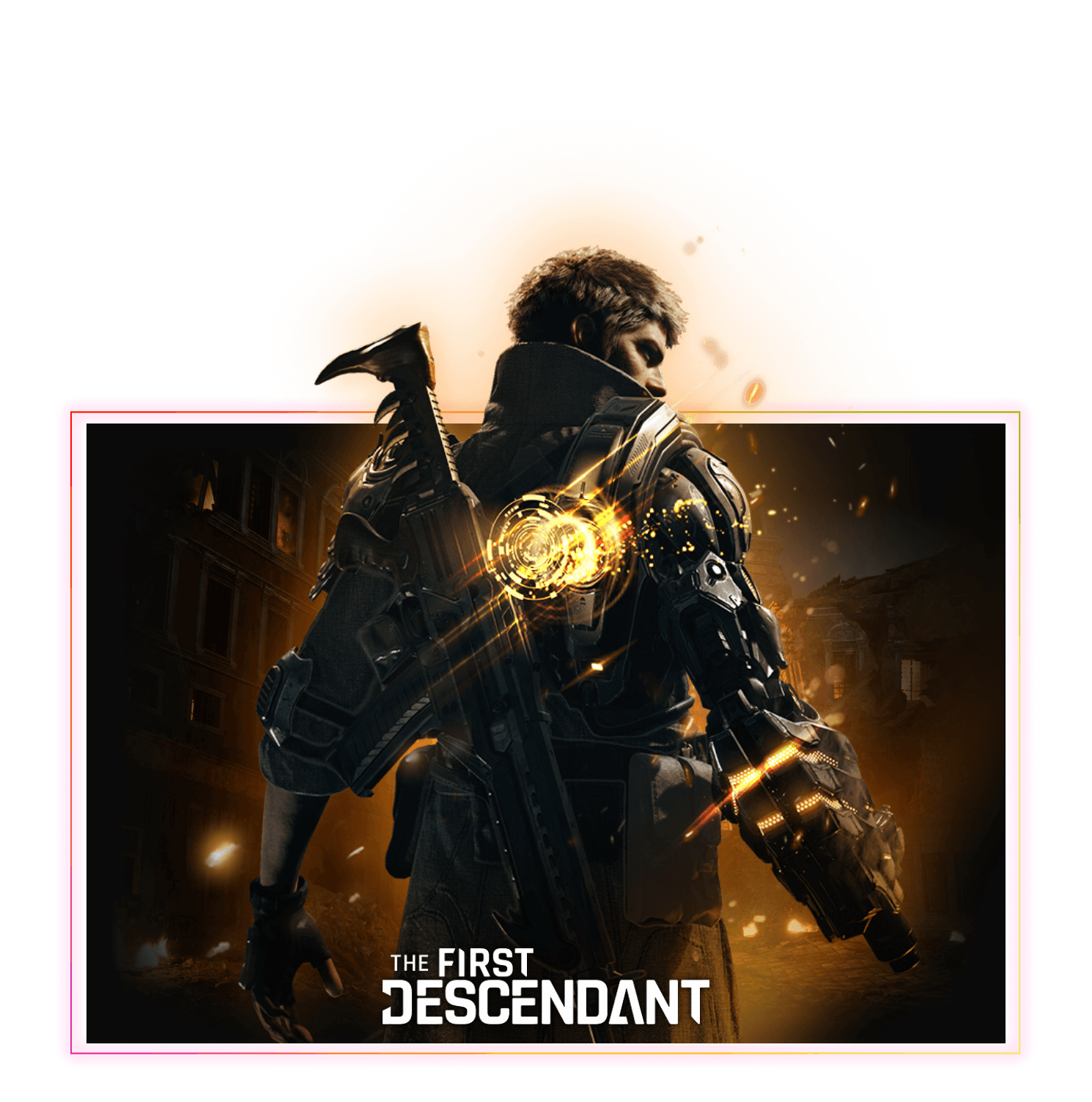
The First Descendant with HDR10+
Aug 25, 2023
The First Descendant New Prologue is here! Check out the all-new prologue and be prepared to join the Crossplay.
The First Descendant
New HDR10+ Gaming Standard
Jan 5, 2022
HDR10+ Technologies LLC, an industry group with over 128 licensees and nearly 5,000 supported devices.
Read More
HDR10+ Sizzle Reel
Oct 20, 2021
View the 2021 Sizzle Reel for HDR10+ and some of the newest content available to consumers.
View Now
HDR10+ Ecosystem Workshop
Oct 20, 2021
Follow-up to our HDR webinar in June. In this webinar the HDR10+ Technologies LLC presents a closer look at the story behind the development of HDR10.
View Now
Understanding the HDR Landscape Webinar
Jun 15, 2021
Check our 2021 featured webinar on understanding the HDR Landscape, a deeper dive into HDR10+ technologies.
View Now
Understanding the HDR10 Ecosystem
Jun 8, 2021
In the digital age, the choice of consumer displays and projectors has never been better – and never more potentially confusing. Download PDF
Read More
HDR10+ System Whitepaper
Sep 4, 2019
Display devices are acquiring the ability to show an increased range of brights, darks, and colors leading to realism.
Read More
CONNECT WITH US
Connect with someone from the HDR10+ team to learn more about our streaming and gaming experiences, our adopter program, and product portfolio.